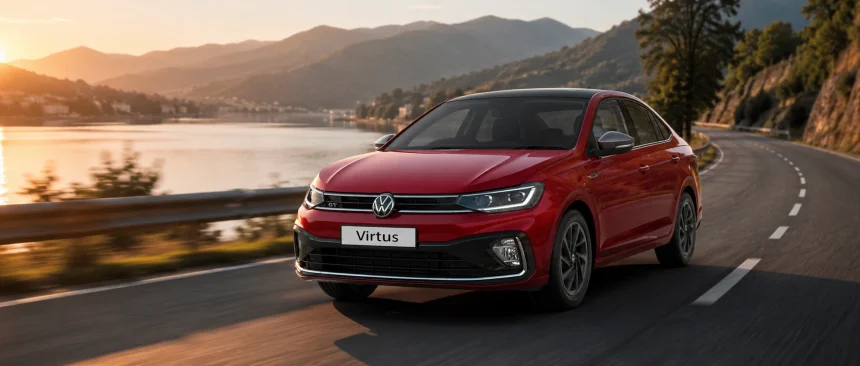
What if the car that you had labeled as “nothing but a Vento with another nameplate on it” arrived one day with a light bar mounted on its front, sensors to monitor its radar, and a transmission that works the way it should have from the very beginning?
That’s roughly the pitch Volkswagen is putting together for the Virtus facelift, and going by the spy shots doing the rounds since April, it’s not just wishful thinking anymore. Here’s everything we know so far, separating what’s confirmed from what’s still educated guesswork.
Is Volkswagen Actually Updating the Virtus, or Is This Just Rumor Mill Noise?
Fair question, given how many “facelift” stories turn out to be nothing. But this one’s real. Volkswagen officially confirmed a mid-life update is in the works, and test mules were spotted testing for the first time on 7 April 2026, camouflage and all. That’s usually the point where a launch stops being speculation and starts being a countdown.
The Virtus model has been available from March 2022. It is manufactured on the MQB A0 IN platform, which is also used by the Skoda Slavia. Four years is about how long Volkswagen updates cars in this class.
What’s Changing on the Outside Of Volkswagen Virtus facelift 2026?
Absolutely nothing exciting here, and in fact, it’s quite typical of VW. The face will see a new front bumper, new grille design, and new graphics for the headlamps. What we’ll be seeing more of is the illuminated VW badge at the front end, something seen before in the Taigun’s facelift, giving it a more premium and technology-oriented appearance at night.
At the rear end, we’ll be looking at new graphics in the taillamps, featuring a new LED design along with sequential turn signals: a very small change, but one which would make the car appear more modern. There’ll be new alloy wheels too, but there won’t be any changes to the side profile.
Will the Cabin Finally Get the Tech Upgrade It Deserves?
This is where the facelift seems to matter more than the sheet metal changes. Reports point to a new digital instrument cluster, an updated infotainment layout, and possibly some form of AI voice assistant integration. VW’s been pushing this across its global lineup, so India getting a taste of it isn’t far-fetched. Front parking sensors, missing on the current car (an odd omission, if we’re being honest), are also expected to be added.
However, the more interesting thing is the safety features. The redesign is expected to come with Level 2 ADAS, including adaptive cruise control, lane-keep assist, forward collision warning, and 360-degree cameras. If Volkswagen does this right, pricing-wise, the Virtus will suddenly be on another level compared to the Verna and City, which have traditionally lagged behind in ADAS technology in this price segment.
What About the Engines: Same Old, or Something New?
Technically speaking, you shouldn’t expect much from this upgrade. In all likelihood, the Virtus will keep offering its 1-liter turbo-petrol and 1.5-liter turbo-petrol engines, which is alright, considering both are good motors anyway. There’s nothing about them that needs changing.
The important change will be seen in the interior of the transmission – specifically, the 1-liter TSI will reportedly replace the existing torque converter auto with an 8-speed gearbox, similarly to what the Skoda and VW have done in the Kushaq and Taigun upgrades. It’s a welcome upgrade indeed. The old torque converter wasn’t exactly the most refined gearbox out there, so it’ll be nice to see it replaced with a better one.
When’s It Actually Launching, and What Will It Cost?
Here, there is slight variation in sources, but things seem to be coming around towards the end of 2026. Almost all of them put the launch date somewhere in the September to November 2026 timeframe, while the estimated price ranges between ₹11.80 lakh and ₹12 lakh (ex-showroom) for the entry-level model. Prices of top-spec GT Automatic trims may easily touch ₹19 lakh and more after the whole fuss subsides.
Worth noting: All these figures are merely speculative at this point, coming from dealers and other industry-related sources. No official figures from Volkswagen India have been confirmed yet.
How Does the Current Virtus Hold Up, for Context?
If you’re trying to decide whether to wait for the facelift or grab a current-gen car at a discount, it helps to know what you’re giving up. The outgoing Virtus is genuinely one of the more satisfying sedans to drive in this segment. The 1.5 TSI GT Plus, in particular, earns a lot of praise for how planted and eager it feels on the highway, something rivals with CVTs or smaller turbo units can’t quite match. The DSG gearbox is quick and decisive, the 521-liter boot is genuinely useful for a family, and the 179mm ground clearance means Indian roads won’t catch you out.
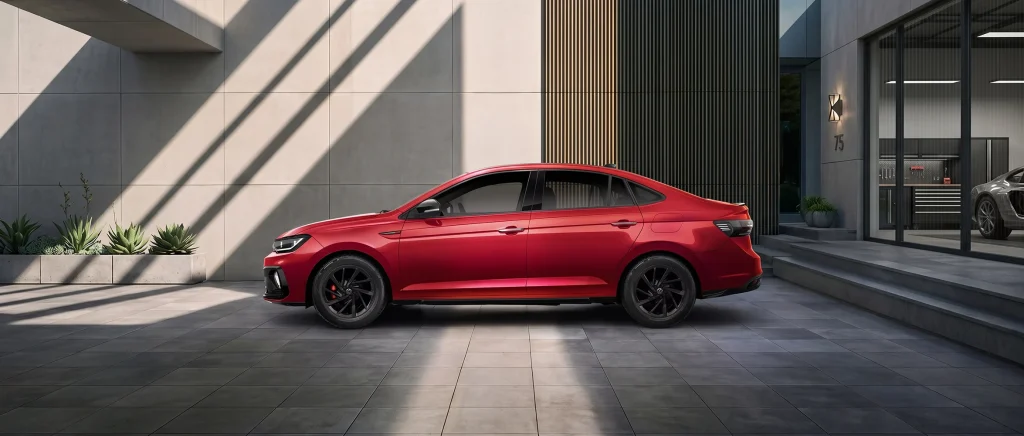
Where it loses ground is the cabin. VW hasn’t been shy with hard plastics, and features like a sunroof (yes, still missing) and a bigger feature list are things buyers keep asking for. If the facelift addresses even half of that feedback, it’ll be a meaningfully better package.
Key Specifications at a Glance
| Specification | Details (Expected/Carryover) |
| Body Type | 4-door Sedan |
| Platform | MQB A0 IN |
| Engine Options | 1.0L TSI Turbo-Petrol, 1.5L TSI Turbo-Petrol |
| Transmission | 6-speed Manual, 6-speed Torque Converter, 8-speed Automatic (new, on 1.0 TSI) |
| Ground Clearance | 179 mm |
| Boot Space | 521 litres |
| Safety | 6 Airbags (standard), 5-Star Global NCAP rating, Level 2 ADAS (expected new) |
| Key New Features | Illuminated VW logo, digital instrument cluster, 360-degree camera, front parking sensors |
| Expected Price | ₹11.80 lakh – ₹19.70 lakh (ex-showroom, estimated) |
| Expected Launch | September–November 2026 |
| Rivals | Hyundai Verna, Honda City, Skoda Slavia |
Note: Figures marked “expected” are based on industry reports and spy shots as of July 2026, and are subject to change until VW’s official announcement.
Should You Wait for the Facelift or Buy the Current Virtus Now?
Well, it depends on what bothers you about the current model. If lack of ADAS features and an outdated infotainment system are showstoppers for you, then it makes sense to wait for several months. Particularly because it is not uncommon for dealers to offer discounts to sell off the outgoing model line-up after the facelift was announced, so you can get an already updated Virtus at a real bargain in the meantime.
However, if you need the vehicle asap and adore the drive of the current GT Plus version, then you don’t have any specific reason to delay your decision. Besides, the mechanical core of the Virtus won’t change dramatically. So, whatever the case may be, it seems that the upcoming Virtus facelift will be a justified move for an already pretty capable sedan.
FAQs
1. When will the Volkswagen Virtus facelift launch in India?
A. Most estimates point to a launch between September and November 2026, though Volkswagen hasn’t confirmed an official date yet.
2. What is the expected price of the Volkswagen Virtus facelift?
A. Prices are expected to start around ₹11.80–12 lakh (ex-showroom) and could go up to nearly ₹19.70 lakh for the top-spec automatic variant.
3. Will the Virtus facelift get a sunroof?
A. There’s no confirmation of a sunroof being added. Current reports don’t list it among the expected upgrades, though this could change closer to launch.
4. What engines will the Virtus facelift offer?
A. It’s expected to retain the existing 1.0L and 1.5L TSI turbo-petrol engines, with the 1.0L TSI likely gaining a new 8-speed automatic gearbox.
5. Will the facelift get ADAS features?
A. Yes, reports suggest the Virtus facelift will introduce Level 2 ADAS along with a 360-degree camera system, a first for this model.