What if the car you almost bought last year scored a zero in a crash test, and then, a few months later, walked away with four stars instead? That’s not a hypothetical.
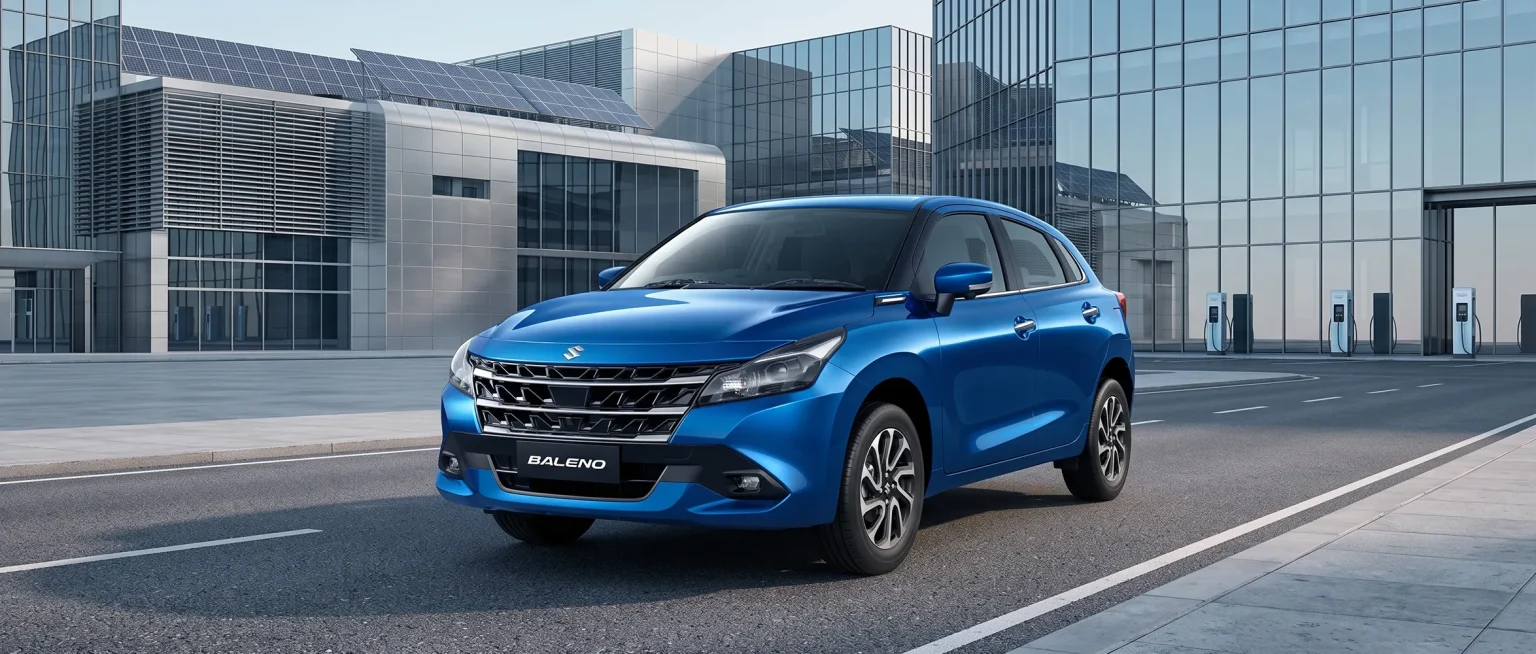
It’s exactly what happened with the India-made Toyota Starlet. Built on Suzuki’s Baleno platform in India and sold in South Africa, this little hatchback went from a headline-making failure to a genuine safety turnaround story.
Quick Recap
The Toyota Starlet received an upgrade from 0 stars to 4 stars regarding adult occupants’ protection in Global NCAP’s latest test. This improvement resulted from the installation of 6 airbags in the Toyota Starlet. Previously, it did not have side curtain airbags. Child-passenger protection remains the same: 3 stars.
| Question | Direct Answer |
| What changed? | Six airbags became standard, including side curtain airbags |
| Old adult rating | 0 stars |
| New adult rating | 4 stars |
| Child occupant rating | 3 stars, unchanged |
| Who tested it? | Global NCAP, under the SaferCarsForAfrica programme |
| Who paid for the retest? | Global NCAP, after Toyota declined a voluntary test |
How Bad Was The Original Zero-Star Result?
In May 2026, Global NCAP tested the outgoing, two-airbag version of the Starlet. The car scored zero stars for adult occupant protection and three stars for child occupant protection.
Testers found an unstable bodyshell, weak side-impact protection, and no side head-protection airbags. More than 20,000 units of this car had already been sold in South Africa, so the result was a serious reputational hit.
What Exactly Went Wrong The First Time?
Global NCAP’s report was specific about the failures. Here is the breakdown:
- Frontal impact: Reasonable head and neck protection, but the footwell was unstable
- Body shell: Rated unstable and unable to withstand further loading
- Side impact: Extremely high risk of head and chest injury due to no side airbags
- Side pole test: Marginal chest protection, no head protection at all
- Child occupant test: The 3-year-old dummy’s head made contact with the interior in both frontal and side tests
An unstable structure combined with zero side airbags is close to a worst-case scenario in modern crash testing.
The Fix: Six Airbags Standard Across The Range
Toyota responded with a production update at its Indian plant. This update made the Toyota Starlet 6 airbags standard equipment, including side curtain airbags. It applied across the full Starlet lineup sold in South Africa, not just the top trim.
The vehicle also retained some of its old features like electronic stability control, ISOFIX anchorages for the rear child seats, and reminder for the seatbelts. The side airbag was one of the missing features Global NCAP considered too crucial to omit.
Why Did Global NCAP Fund The Retest Itself?
Global NCAP offered Toyota the chance to voluntarily submit the upgraded six-airbag Starlet for testing, so the brand could demonstrate the improvement on record. Toyota declined that offer.
Global NCAP then decided to fund and run the test independently, using its own budget. This is an uncommon step in crash testing, and it signals how much weight the organization placed on publishing this specific result.
The New Result: 4 Stars For Adults, 3 For Children
The enhanced crash test for the Toyota Starlet clearly improved in all measures of side impact performance:
| Test Category | Two Airbag Version (May 2026) | Six Airbag Version (Retest) |
| Adult Occupant Protection | 0 stars | 4 stars |
| Child Occupant Protection | 3 stars | 3 stars |
| Side Impact Head Protection | High risk | Good |
| Side Pole Head Protection | No protection | Good |
| Side Pole Chest Protection | Marginal | Marginal |
Adult occupant protection jumped four full stars from a single hardware change. Child occupant protection did not move, which suggests restraint performance for younger passengers still has room to improve.
What Global NCAP And The AA Said?
Richard Woods, CEO of Global NCAP, called the result proof that car manufacturers take safety seriously and don’t just tick boxes. The Automobile Association of South Africa noted that going from zero stars to four stars was quite an accomplishment.
The underlying point is simple. This was not a new platform or years of re-engineering. It was an airbag count change. That alone shows how much weight side airbags carry in real-world crash outcomes, especially in budget-focused cars.
Does This Affect The Toyota Glanza Safety Rating In India?
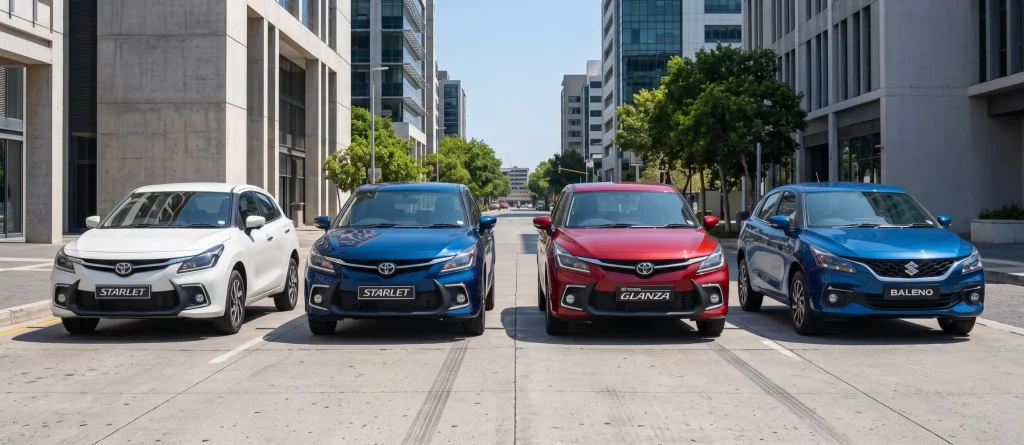
Not directly. The Starlet sold in South Africa is a rebadged version of the India-built Toyota Glanza, which shares its underpinnings with the Maruti Suzuki Baleno. But the Toyota Glanza safety rating in India is a separate matter from this South African test result.
Here is what buyers in India should actually know:
- The Glanza sold in India has not been independently crash tested by Global NCAP or Bharat NCAP as a standalone model
- The Starlet tested by Global NCAP was the export spec version, built to South Africa’s market requirements
- The Baleno, the Glanza’s mechanical twin, scored four stars in Bharat NCAP testing conducted in India in 2025
- Top Glanza variants sold in India already come with six airbags, similar to the updated Starlet
To take the Starlet’s GNCAP figure as the official Glanza NCAP number would be quite a leap. From an Indian perspective, the most relevant NCAP figure is the Baleno’s Bharat NCAP rating.
Model Comparison At A Glance
| Model | Market | Crash Test Body | Official Rating |
| Toyota Starlet, 2 airbags | South Africa | Global NCAP | 0 stars, adult |
| Toyota Starlet, 6 airbags | South Africa | Global NCAP | 4 stars, adult |
| Maruti Suzuki Baleno | India | Bharat NCAP | 4 stars |
| Toyota Glanza | India | Not officially tested | Not rated |
Key Takeaways For Buyers
- Number of airbags alone does not determine safety, but their lack is a sure liability in side collisions
- A car’s rating can change significantly without a full redesign since production updates matter
- Export specifications and domestic specification models of the same platform may have different safety equipment; hence, rating systems cannot always be transferred from one market to another
- Always check the exact variant and airbag count of the specific car you are buying rather than relying on the nameplate alone
The Bigger Picture For India-Made Cars
India is becoming a major exporter of affordable hatchbacks. This example proves that all this scrutiny works well. Negative results have driven public pressure, hardware updates, and new testing, which proved the updates were successful.
It also shows how the same base vehicle can be equipped differently depending on the market. Buyers in India considering the Glanza should look for official Bharat NCAP data on the model itself rather than drawing conclusions from a related export test.
Wrapping Up
Toyota Starlet safety rating is one of the few examples of accountability actually bearing fruit. A zero-star rating brought public attention and led to the issue being fixed by installing standard side airbags, followed by a second test and a better rating. For Indian consumers, another point to consider: the rating applies to the export version of the car, the Starlet, rather than the Toyota Glanza. Nevertheless, it shows how much the number and type of airbags matter.
FAQ
1. What caused the Toyota Starlet’s rating to improve from 0 to 4 stars?
A. Toyota made six airbags, including side curtain airbags, standard equipment across the Starlet range. This fixed the side impact weakness that caused the original zero-star result.
2. Is the Toyota Starlet the same car as the Toyota Glanza?
A. They are closely related. The Starlet sold in South Africa is a rebadged version of the India-built Glanza, which shares its platform with the Maruti Suzuki Baleno.
3. Does this GNCAP result apply to the Glanza sold in India?
A. No, not officially. Global NCAP or Bharat NCAP has not independently crash-tested the Glanza in India. This result applies specifically to the South African spec Starlet.
4. Why did Global NCAP fund the retest itself instead of Toyota?
A. Toyota declined Global NCAP’s offer to voluntarily submit the upgraded car for testing, so Global NCAP paid for and conducted the retest independently.
5. Did child occupant protection also improve along with adult protection?
A. No. Child occupant protection stayed at three stars in both the original and updated tests, so that area still has room for improvement despite the jump in adult protection.