What if just one company was responsible for almost every second electric car sold in the country? Sounds unlikely, right? But that’s almost the reality in India right now.
Tata Motors has made an unspoken (yet bold) lead within the EV industry that other players find difficult to match. Indian-made cars saw a sudden spike in EV sales in July 2026, increasing their share of the market to more than 41%.
The figures surrounding this trend speak volumes. For anyone following an automobile industry update, Tata’s latest numbers are particularly significant.
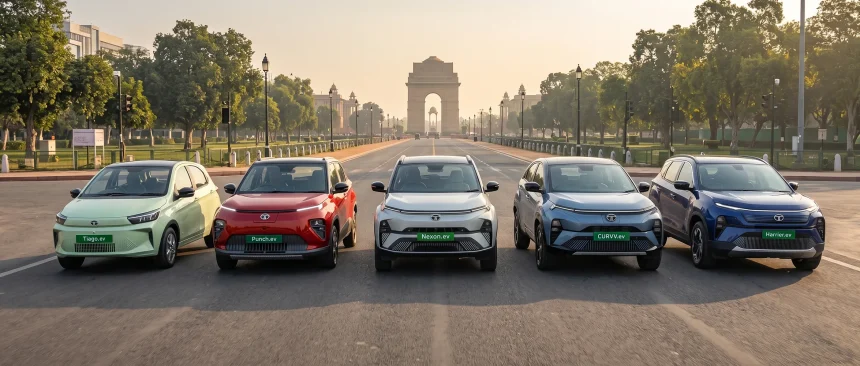
Key Specifications: Tata’s Current EV Lineup
| Model | Starting Price (Ex-showroom) | Battery Options | ARAI Range | Notable Feature |
| Tiago EV | ₹7.99 lakh | 19.2 kWh / 24 kWh | 250 km / 315 km | Most affordable Tata EV |
| Punch EV | ₹9.69 lakh | 40 kWh | Up to 468 km | 20-80% fast charge in 26 mins |
| Nexon EV | ₹12.49 lakh | Medium & Long Range | Up to 489 km | Best-selling Tata EV |
| Curvv EV | ₹21.49 lakh | 45 kWh / 55 kWh | 502–585 km | Coupe-SUV styling |
| Harrier EV | ₹21.49 lakh onwards | 65 kWh / 75 kWh | Up to 627 km | Flagship, panoramic sunroof, JBL sound |
Prices and specifications may vary by variant and are subject to change. Check with an authorized Tata Motors dealer for the latest figures.
Tata Motors Leads India’s EV Market: What Actually Happened in July?
The growth rate of the Indian E-PV market stood at 73% compared to the previous year in July 2026, with a tally of 31,138. It is a good figure in itself. However, looking closely at Tata Motors in particular reveals something really fascinating. The Indian manufacturer registered 12,896 E-PVs in July, which is a huge jump from 92% in the same month last year. Its market share stood at 41.4%, a growth of almost 4% over last year’s figure of 37.4%. Thus, about four out of every ten electric cars sold in India this month were made by Tata Motors.
On the wholesale side (factory dispatches to dealers), the picture is even bigger. Tata Motors reported 15,217 EV units dispatched in July, up a massive 114% year-on-year, crossing the 15,000-unit mark in a single month for the very first time. The company also said it recorded its highest-ever VAHAN (vehicle registration database) numbers for the month, which basically means actual customers were driving these cars home, not just sitting in dealer lots.
Electric vehicles now make up close to 24% of Tata’s total passenger vehicle sales, up from around 18% a year ago. That’s a meaningful shift for a company that still sells plenty of petrol and diesel vehicles too. A quick note on the numbers floating around: depending on whether you’re looking at retail registrations, wholesale dispatches, or industry-wide estimates, the reported growth figure for Tata’s July EV performance ranges anywhere from the low 80s to over 110%.
All of them point to the same story, though: Tata had its strongest EV month yet, by a wide margin. This is also the kind of development likely to feature prominently in auto industry news today, as automakers continue to compete for a larger share of India’s growing EV market.
Why Is Tata Pulling So Far Ahead of Everyone Else?
It’s not luck. A few things are working in Tata’s favor at the same time. First-mover advantage that’s still paying off. Tata was among the earliest Indian carmakers to bet seriously on EVs, and that early groundwork with the Nexon EV and Tiago EV built brand trust that’s hard to replicate overnight. A wide portfolio across price points. From the Tiago EV, which starts under ₹8 lakh, to the Nexon EV, Curvv EV, and the newer Harrier EV, Tata has something for almost every buyer, whether someone wants a budget-friendly city hatchback or a premium electric SUV.
Greater range and better charging speeds. The newer models, such as the Punch EV and Curvv EV, are now certified by ARAI with ranges beyond 400-500 kilometers, coupled with quick DC charging that can help solve the range anxiety faced by consumers previously. Extensive dealer and service networks. The already established dealer/service network from petrol and diesel vehicles also works for electric vehicles.
Battery-as-a-Service and flexible pricing. With options like BaaS pricing on the Punch EV, Tata has made entry-level EV ownership more accessible for cost-conscious buyers. For readers tracking every automobile industry update, these changes also show how manufacturers are adjusting pricing and ownership models to make EVs more accessible.
Who’s Actually Giving Tata a Run for Its Money?
Tata isn’t cruising unchallenged, though. Mahindra & Mahindra has emerged as a genuine second force in this race. Mahindra registered 7,400 EV units in July, a striking 145% year-on-year jump, pushing its market share up to 23.8% from 16.8% a year ago. That’s the fastest growth rate among major players, even though Mahindra’s numbers dipped slightly compared to June.
Meanwhile, MG Motor, once seen as a serious EV challenger with the Comet and ZS EV, has been losing ground steadily, as newer, more affordable options from Tata and Mahindra chip away at its share. Here’s the bigger takeaway: despite all this hectic activity, EV penetration in India’s overall passenger vehicle market stayed flat at 7.7% in July, unchanged from June. So the pie itself isn’t growing dramatically yet, it’s the slices within it that are being redistributed, and Tata is grabbing the biggest slice. The shifting market shares are an important part of auto industry news today, particularly as Mahindra continues to close the gap with strong year-on-year growth.
What’s Actually Making These Cars Safe to Drive?
Buying an EV isn’t just about range and price anymore, and Tata seems to know that. Most of its electric models come with 6 airbags as standard, along with ABS with EBD and electronic stability control (ESC) built in rather than offered as an add-on. Cars like the Nexon EV and Curvv EV also feature a 360-degree camera system, front and rear parking sensors, and ISOFIX child seat mounts, which matter a lot for families.
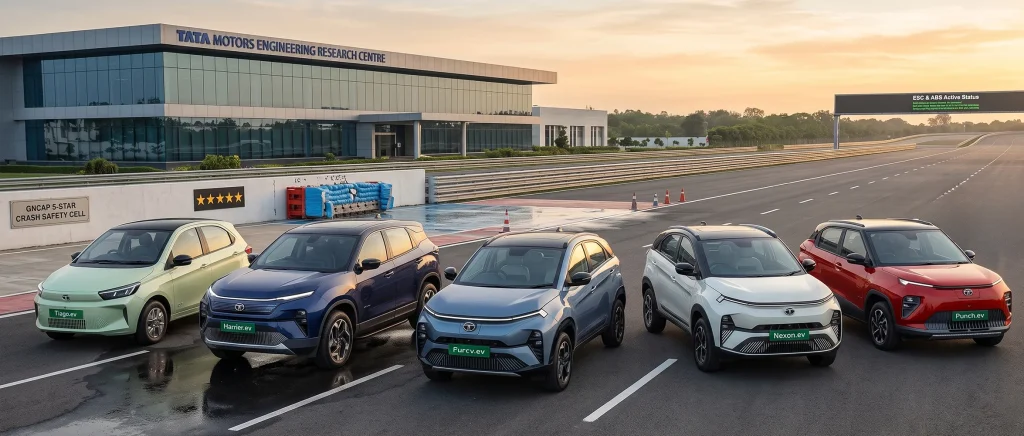
Several models carry strong crash test ratings, and the battery packs themselves are IP67-rated for water and dust resistance, with reinforced housing to protect against impact. Tata also backs its high-voltage battery packs with long warranties, in some cases lifetime coverage on newer models, which adds a layer of reassurance for anyone still on the fence about going electric.
What Does This Mean for the Rest of FY2027?
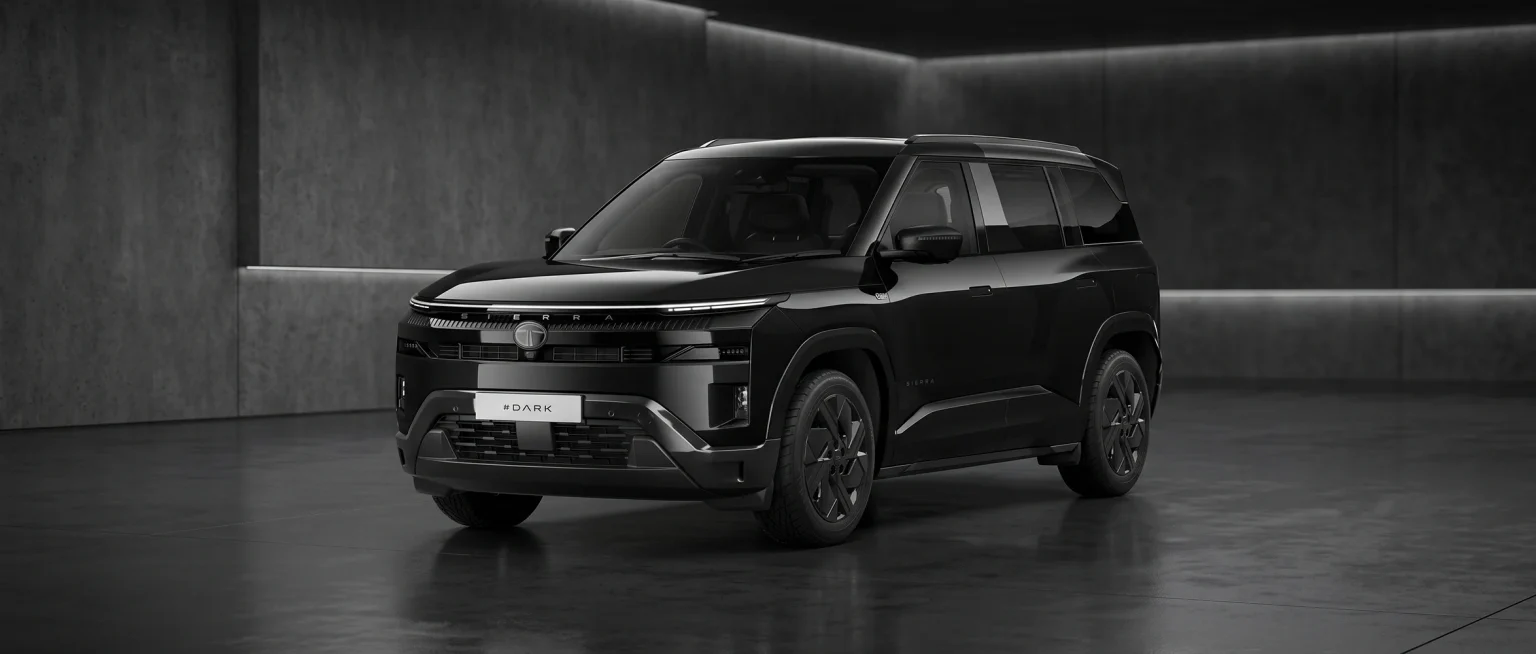
Tata Motors’ broader passenger vehicle business had a strong July too, with total sales (domestic plus exports) touching 63,760 units, a 59% year-on-year increase. Domestic sales alone stood at 62,611 units, up nearly 58% from July last year, while exports rose 76% to 1,149 units. The company now enters the rest of the financial year with real momentum behind it. New launches are already lined up, including electric versions of the Sierra and Safari, which are expected to push Tata further into the premium SUV space where it hasn’t traditionally had a strong EV presence. If that expansion goes as planned, Tata’s lead could stretch even further before rivals find their footing.
However, maintaining this level of success may not come easy. Competition in the compact and mid-sized SUV segments is intensifying, while pricing pressures in the EV category may cut into profits even as sales rise. It will be a challenge for Tata to maintain its edge without resorting to discounts. This is why the success of Tata can be considered an automobile industry update.
Wrapping Up
Tata Motors’ performance for the month of July 2026 clearly indicatesthat the firm continues to be the dominant player in the Indian market for electric passenger vehicles. Given the sharp increase in registrations and a 41.4% market share, Tata’s dominance has certainly set the ball rolling. On the other hand, Mahindra’s rapid growth clearly reflects intensifying competition. There is no doubt that with the launch of new electric vehicles and improved technology in the coming years, the game is far from over for Tata.
FAQ
1. How much did Tata Motors’ EV sales grow in July 2026?
A. Tata Motors’ EV registrations grew 92% year-on-year to 12,896 units in July 2026, while wholesale dispatches jumped 114% to a record 15,217 units.
2. What is Tata Motors’ current market share in India’s EV segment?
A. Tata Motors held a 41.4% share of India’s electric passenger vehicle market in July 2026, up from 37.4% a year earlier.
3. Who is Tata Motors’ biggest competitor in the EV space?
A. Mahindra & Mahindra is currently the closest rival, with EV registrations growing 145% year-on-year and market share rising to 23.8%.
4. Which Tata EV offers the longest driving range?
A. The Tata Harrier EV currently offers the longest claimed range among Tata’s electric lineup, going up to 627 km on a single charge.
5. Are Tata electric vehicles considered safe?
A. Yes. Most Tata EVs come with 6 airbags, ABS with EBD, electronic stability control, and strong crash test ratings as standard across variants.