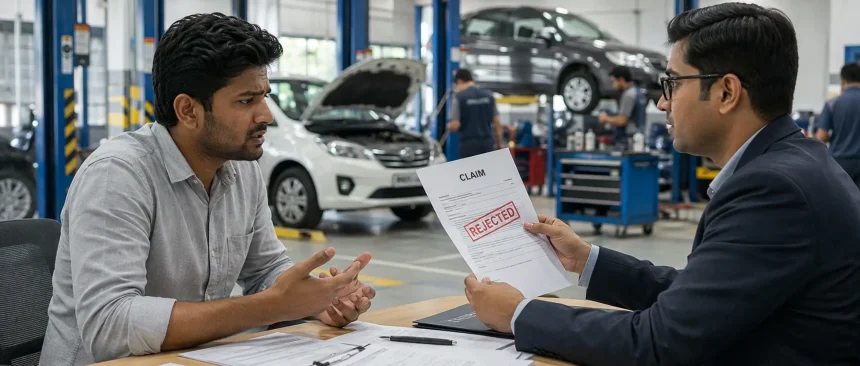
What if you took your car in for a routine service and the mechanic pointed at a corroded fuel line, told you E20 petrol was the culprit, and a week later your insurer flatly refused to pay for it? That’s exactly the situation a growing number of Indian car owners are waking up to.
With E20 now the default fuel at pumps across the country, confusion around what insurance actually covers has turned into a genuine headache for anyone whose vehicle wasn’t built with higher ethanol blends in mind. Here’s how to handle it.
Does E20 Fuel Damage Actually Cancel Your Insurance?
Let’s clear this up first because it’s the root of most of the panic. No, simply putting E20 petrol in your tank does not void your car insurance policy. The government and multiple insurers, including ICICI Lombard, have said this outright. The type of fuel you use, whether it’s petrol, diesel, CNG or E20, isn’t something that decides whether your policy stays valid. Your insurance doesn’t care what’s in your tank. What it cares about is what caused the damage you’re now claiming for. That’s the real distinction people miss. There are two separate questions being tangled together:
- Is my policy still active and valid? Yes, always, regardless of fuel type.
- Will this specific repair get paid for? That depends entirely on the cause of the damage.
E20 is petrol blended with 20% ethanol, and it’s been the standard grade sold nationwide since April 2025. You can’t even buy the older E10 blend anymore unless you’re paying a steep premium for pure petrol (XP100), which isn’t practical for most people anyway.
Why Do Insurers Reject These Claims Then?
That’s where things get a little more complicated. Comprehensive car insurance covers sudden and unexpected incidents – such as collision, fire, theft, and flooding. It does not usually cover “consequential damage,” which means gradual deterioration through time. The ethanol present in gasoline attracts water, and when used in vehicles not meant to handle ethanol-blended gasoline, this can cause corrosion of fuel system components like:
- Rubber seals and gaskets
- Fuel pumps
- Fuel tanks and fuel lines
- Injector components
Because this kind of damage develops gradually rather than happening in one dramatic moment, insurers often classify it as consequential damage or normal wear, and both are usually excluded from standard policies. One insurer even suggested that running an older, non-compliant car on E20 for a long stretch could be viewed as negligence on the owner’s part, which adds another layer of risk to the claim.
What Are the Warning Signs Before It Becomes a Claim Fight?
Catching trouble early can save you the entire headache of a dispute later. Keep an eye out for:
- Fuel pumps or rubber seals needing replacement earlier than expected
- A noticeable drop in mileage or the engine running rough
- Dashboard warning lights appearing after extended use on higher-ethanol fuel
- Difficulty starting the car or inconsistent idling
Some anxious owners have switched over to ethanol-free XP100 petrol, but at around ₹160 a liter, it’s an expensive habit, and newer cars that are already E20-compliant gain almost nothing from making the switch.
Your Claim Got Denied: What Do You Do Right Now?
This is the part that actually matters if you’re staring at a rejection letter. Don’t panic, and definitely don’t argue over the phone. Follow this sequence instead.
- Get the denial in writing: A verbal “no” from a call center representative leaves no evidence to argue. Request a formal letter or email that addresses the specific policy provision the insurance company is basing its denial on.
- Don’t touch the car. Avoid repairing or even moving the vehicle until a surveyor has properly inspected it. Fixing it first destroys the evidence you’ll need later.
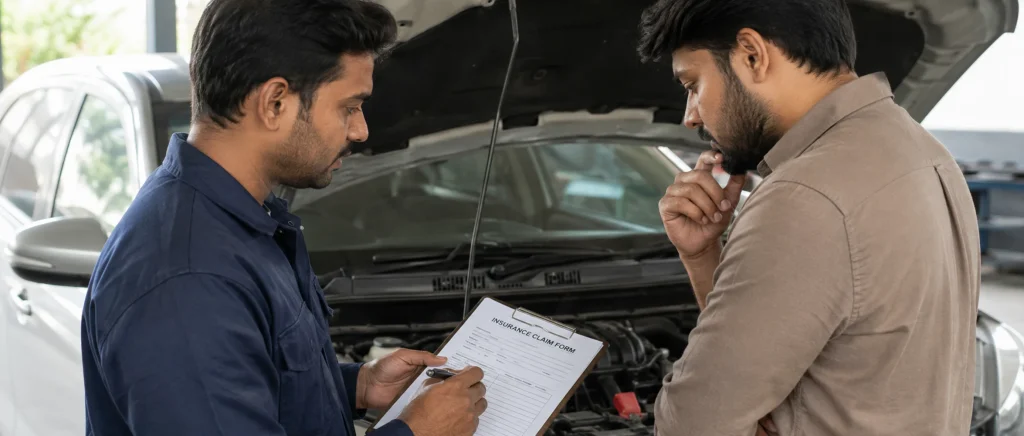
- Get an independent opinion. Take the car to an authorized workshop or hire an independent surveyor to assess the actual cause of the damage. If they conclude it’s from a sudden mechanical failure rather than slow corrosion, that report becomes your strongest weapon.
- Cross-check the clause. Read your policy document line by line. Many rejections are based on generic “wear and tear” clauses that may not actually apply cleanly to your specific situation.
- File a written appeal. Send a formal representation to the insurer’s grievance cell, attaching your independent report and clearly explaining why the damage should be treated as an insured event, not routine deterioration.
- Escalate if needed. If the insurer still refuses, you can approach the Insurance Ombudsman or the IRDAI’s grievance redressal system. These are free, and a documented paper trail makes your case far stronger.
Quick Reference For E20 Insurance Disputes
| Aspect | Details |
| Fuel type | E20 (20% ethanol, 80% petrol) |
| Standard since | April 2025, across India |
| Does it void insurance? | No — fuel type isn’t a factor in policy validity |
| What’s usually covered | Sudden events: accidents, fire, theft, natural calamity |
| What’s usually excluded | Consequential damage, gradual wear and tear |
| Common ethanol-linked damage | Corroded seals, gaskets, fuel lines, fuel pumps |
| Alternative fuel option | XP100 (pure petrol), roughly ₹160/litre |
| First step after denial | Written denial letter naming the exact clause |
| Escalation route | Insurer grievance cell → Insurance Ombudsman → IRDAI |
Does Your Car Have Any Safety Cushion Against Ethanol Damage?
Modern cars available in India, particularly those made after 2023, are usually designed for use with E20 as standard because they need to adapt to the government’s roadmap for ethanol blending. Modern cars use rubber seals that can withstand ethanol damage, fuel tank lining capable of resisting corrosion, and fuel injectors that can accommodate high amounts of ethanol and thus have a lower chance of wearing out gradually.
In some new cars, diagnostic warnings detect abnormal fuel system activity at an early stage so the owner can take action before the situation becomes a major problem. However, in the case of an old car, no such internal safety measures will be available; hence, it is even more necessary for you to check your fuel system.
Is This Really Just a Rumor, Or Is There Something to Worry About?
Much of the panic started with viral social media posts rather than any actual insurer policy change, and the government has been fairly firm in shutting down the idea that E20 automatically invalidates coverage. That said, the underlying concern about consequential damage exclusions isn’t invented. It’s a genuine grey area that existed in insurance policies long before E20 became the norm. The honest answer sits in the middle: your policy is safe, but individual claims still depend on proving what actually caused the damage.
FAQ
1. Is it possible that my insurer could cancel my insurance for using E20 fuel only?
A. No, because neither the insurer nor the authorities have stated that using a particular kind of fuel would invalidate the policy.
2. Why did my specific claim get turned down?
A. Most likely because the insurer classified the damage as gradual wear and tear or consequential damage, which standard comprehensive policies typically exclude.
3. Should I switch to XP100 petrol to avoid future disputes?
A. It can reduce risk for older, non-compliant vehicles, but it’s expensive and offers little benefit for newer E20-compatible cars.
4. What’s the strongest evidence I can use to challenge a denial?
A. An independent surveyor or authorized workshop report that clearly identifies the cause of damage as sudden or mechanical rather than long-term corrosion.
5. Where can I go if the insurer still refuses after my appeal?
A. You can escalate to the insurer’s grievance redressal cell first, and if unresolved, approach the Insurance Ombudsman or IRDAI.