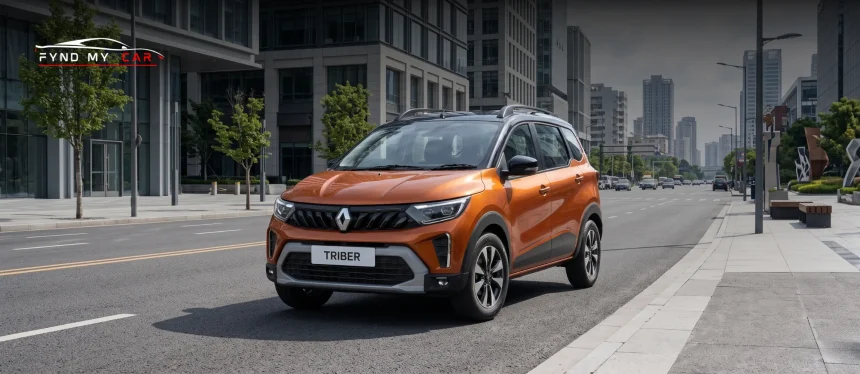
What if the one thing holding your family car back wasn’t space, price, or safety, but just a bit of missing muscle? For years, that was the Triber’s story.
Seven seats, a sensible budget, and an engine that huffed whenever the whole family climbed in. Now Renault has finally fixed that. The Triber Turbo has arrived at ₹7.84 lakh (ex-showroom), packing 100 PS and 180 Nm into the same practical body.
So is it worth the extra money? Let’s go through the power, mileage, variants, and the fine print together, honestly and without the brochure talk.
Renault Triber Turbo Launched: Overview
Here are the numbers that matter before we get into the details.
| Detail | Renault Triber Turbo |
| Starting price | ₹7.84 lakh (ex-showroom) |
| Top variant price | ₹8.99 lakh (ex-showroom) |
| Engine | 1.0-litre, 3-cylinder turbo-petrol (HR10 / TCe 100) |
| Power | 100 PS |
| Torque | 180 Nm |
| Gearbox | 5-speed manual (for now) |
| Claimed mileage | 21 kmpl (ARAI) |
| 0–100 km/h | About 10.8 seconds (claimed) |
| Ground clearance | 182 mm |
| Seats | 7 |
| Platform | Renault Group Entry Platform (RGEP) |
One thing worth knowing: the Triber Turbo is the first Renault India model built on the new RGEP platform. Renault says it has sold over 2.5 lakh Tribers in India so far.
Price and Variants: What Will It Cost You?
The Triber Turbo comes in three variants: Evolution, Techno and Emotion. The Authentic trim stays naturally aspirated only.
| Variant | Turbo MT (ex-showroom) | NA Petrol MT (ex-showroom) |
| Evolution | ₹7.84 lakh | ₹6.73 lakh |
| Techno | ₹8.53 lakh | ₹7.44 lakh |
| Emotion | ₹8.99 lakh | ₹8.05 lakh |
Variant for variant, the turbo costs roughly ₹94,000 to ₹1.11 lakh more than the regular petrol. Some outlets round these figures up by ₹1,000 and quote ₹7.85 lakh, since the exact price is ₹7,84,900. The Emotion Dual Tone version tops out at about ₹9.20 lakh in at least one report.
Is the Premium Worth It?
Almost a lakh extra isn’t small change, so let’s be fair. You are paying for a stronger engine, retuned safety electronics, a stiffer platform and suspension changes. You are not paying for a new body, a new interior, or a long list of new gadgets. On paper, the engine is the only big headline. Still, think about it this way. A seven-seater that struggles when loaded is tiring to live with. If you carry passengers often or drive on highways, that premium starts to look like a fair deal.
Engine and Performance: The Real Story
This is the part everyone has been waiting for. The Triber now runs the same 1.0-liter three-cylinder HR10 turbo-petrol that powers the Kiger and the Duster 1.0. The output is 100 PS and 180 Nm. Some reports round the power to 99 bhp, which is the same thing in a different unit. Here is the interesting bit. Even though the engine is shared, the Triber reportedly makes more torque than those SUVs, thanks to a new Renault engine management system (R-EMS). Renault also calls it the most torquey MPV under ₹10 lakh.
How Does It Actually Feel?
On the numbers, Renault claims 0–100 km/h in about 10.8 seconds. Autocar India’s gallery lists 10.9 seconds in one place, so treat it as roughly 10.8 to 10.9. What matters more is real-world pull. A turbo engine delivers its torque early, so you get easier overtaking, less downshifting and less drama on inclines. That is exactly where the old naturally aspirated engine struggled with a full cabin. Renault also reworked the thermal management system to cope with the turbo’s higher cooling needs.
Mileage: Does the Turbo Hurt Your Wallet?
Surprisingly, no. Renault claims an ARAI-certified 21 kmpl for the manual turbo, which is better than the 19.76 kmpl figure for the naturally aspirated manual.
| Version | Claimed mileage |
| Triber NA petrol (manual) | 19.76 kmpl |
| Triber Turbo (manual) | 21 kmpl |
A quick reality check, though. ARAI figures come from lab conditions. Owners of older Tribers often report mixed-use mileage in the high teens, so expect your turbo to land lower than 21 in city traffic. Even so, an efficient turbo is a rare treat in this price bracket. With a 40-liter fuel tank, the claimed figure suggests a solid highway range between fill-ups.
What Changed Underneath?
Renault did not just drop in an engine and call it a day. Several mechanical changes came along:
- New RGEP platform with about 10 percent more high-strength steel for better structural strength
- Revised suspension with new springs and shock absorbers, including new valve technology in the dampers
- Anti-roll bars at both the front and rear, which reduce body roll in corners
- Retuned ABS, ESC and traction control specifically for the turbo’s extra performance
- Upgraded cooling system to handle turbo heat
These tweaks matter. More power without matching chassis work would have made the car floaty and nervous.
Ride and Handling
Autocar India’s review says the ride feels more composed at high speeds and less brittle at low speeds. Body control around bends is also better than before. That is a real step up for a car that was always comfortable but a bit wobbly.
It is not all perfect, though:
- The 5-speed manual gearbox feels notchy and needs some effort
- The steering is very light and offers little feedback
- Road and tyre noise is noticeable at higher speeds
If you want sharp driving feel, this is not that car. If you want an easy, relaxed family hauler, it does the job nicely.
Design: Same Look, New Badge
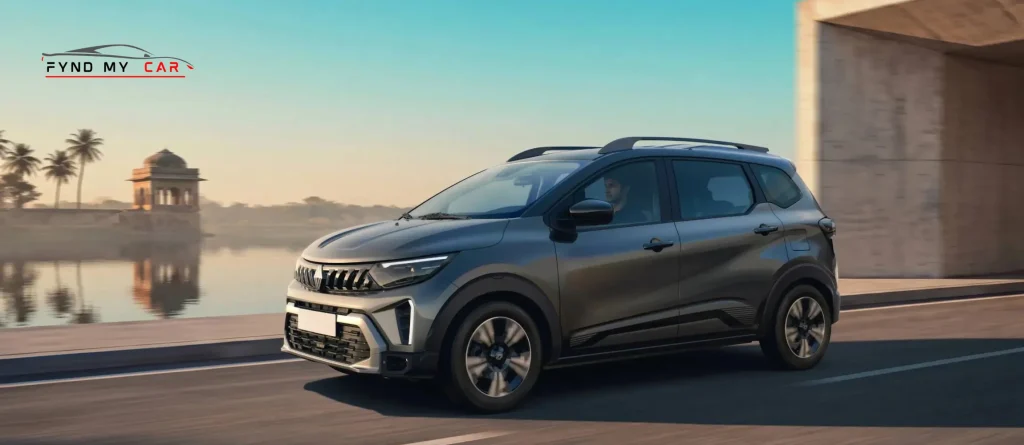
Don’t expect visual fireworks. There are no design changes separating the Triber Turbo from the naturally aspirated Triber. You will mostly spot it by the small “TURBO” badge on the tailgate.
What you do get on the outside:
- Gloss-black grille with Renault’s new logo
- LED projector headlamps with LED DRLs
- 15-inch dual-tone wheel covers styled like alloys
- Functional roof rails
- 182 mm ground clearance, handy for speed breakers and broken roads
Honestly, I like that Renault kept the shape the same. The Triber’s compact, boxy look hides its space well.
Interior, Space and Features
Inside, the layout is familiar. The cabin uses a grey-and-beige theme and prioritizes practicality over luxury. The Triber’s real party trick is still the seating flexibility.
- The second row slides, reclines, and split-folds
- The third row is genuinely usable for adults on shorter trips
- The third row can be removed completely
- Boot space is 625 liters as per Renault’s figures, and it extends further with seats folded flat
A word of caution. Boot space with all seven seats up is minimal, so a family of seven will need a roof carrier or very light packing.
Features You Get
Reports vary slightly by variant, so always confirm on the Renault website or at the showroom before booking. Across the lineup, the highlights include:
| Feature | Details |
| Touchscreen | 8-inch with wireless Android Auto and Apple CarPlay |
| Instrument cluster | Semi-digital / digital display |
| Audio | Six-speaker system |
| Start | Push-button start/stop |
| Climate control | AC with rear vents (auto AC reported on higher variants) |
| Convenience | Wireless charging, cruise control, rain-sensing wipers, auto headlamps (reported) |
One honest note: sources do not agree on whether every variant gets automatic climate control. Check your chosen trim.
Safety: Where the Triber Gets Serious
Safety was always a Triber strong point, and the turbo keeps it that way. Renault lists 21 standard safety features, including:
- Six airbags
- ABS with EBD
- Electronic stability control (ESC)
- Traction control
- Hill-start assist
- Tyre-pressure monitoring system
- ISOFIX child-seat mounts
The Triber previously earned a four-star rating in Global NCAP crash tests. It is worth noting that the turbo’s new platform and electronics were retuned for this version, but the launch coverage I found hasn’t highlighted a fresh crash rating.
What’s Coming Next: CVT and CNG?
At launch, the Triber Turbo is manual only. A CVT automatic is on the way. Reports differ on timing, with Autocar India saying “soon” and other outlets pointing to a Diwali 2026 window or 2027. A factory-fitted CNG version is also planned, with the tank positioned under the floor to protect boot space. Since dates keep shifting, I would not wait on rumors. If you want an automatic today, the naturally aspirated Triber AMT is the only choice.
Rivals: Who Does It Compete With?
The Triber sits in a niche compact MPV segment, and its closest rival is the Nissan Gravita. Buyers also consider small SUVs and hatchbacks in the same budget, including Renault’s Kiger, because the Triber Turbo shares its engine with it. The Triber’s trump card is simple: no other car at this price gives you seven seats and a turbo engine. That is a hard combination to beat.
Pros and Cons at a Glance
| What we like | What could be better |
| Strong 100 PS / 180 Nm turbo engine | Manual gearbox only for now |
| 21 kmpl claimed mileage | Notchy gearbox, light steering |
| Six airbags as standard | Road noise at speed |
| Flexible seven-seat layout | Tight boot with all seats up |
| Better ride and body control | Cabin plastics feel basic |
| Priced under ₹9 lakh | About ₹1 lakh premium over NA |
Who Should Buy It?
Buy the Triber Turbo if:
- You drive on highways or hilly roads regularly
- Your family often travels fully loaded
- You want seven seats without crossing the ₹10 lakh mark
- You are comfortable with a manual gearbox
Skip it if:
- You drive mostly in heavy city traffic and want an automatic
- You rarely carry more than three or four people
- Your budget cannot stretch past ₹7 lakh
Final Verdict
The Renault Triber Turbo does one thing very well. It removes the single biggest complaint people had about the car. For about a lakh more, you get real power, better paper efficiency, and a more settled ride. It is still a Triber at heart, with basic plastics and a plain cabin. But for a family that wants space, safety, and a bit of fun under ₹9 lakh, it makes a strong case. Book a test drive, load it with people, and see how it feels.
FAQs
1. What is the price of the Renault Triber Turbo?
A. It starts at ₹7.84 lakh (ex-showroom) for the Evolution variant and goes up to ₹8.99 lakh for the Emotion variant. A dual-tone Emotion is reported at around ₹9.20 lakh.
2. How much power does the Triber Turbo make?
A. The 1.0-liter three-cylinder turbo-petrol makes 100 PS and 180 Nm of torque, paired with a 5-speed manual gearbox.
3. What is the mileage of the Triber Turbo?
A. Renault claims an ARAI-certified 21 kmpl for the manual. Real-world figures will usually be lower, depending on traffic and driving style.
4. Will the Triber Turbo get an automatic?
A. A CVT automatic and a factory CNG option are planned, but the launch date varies between reports. At present, only the manual is available.
5. Is the Triber Turbo safe?
A. It comes with six airbags, ESC, ABS with EBD, traction control, hill-start assist, TPMS, and ISOFIX mounts. The ABS, ESC, and traction control are retuned for the turbo.