What if the car sitting in your neighbor’s driveway right now is about to feel outdated overnight? That’s exactly what’s happening in the premium hatchback segment this September.
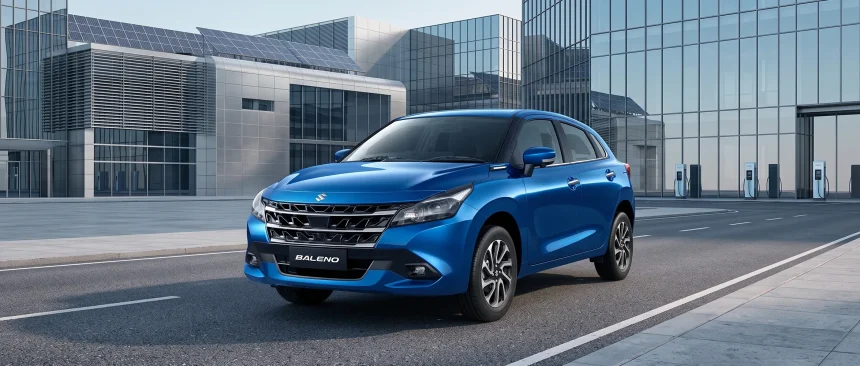
Maruti Suzuki has quietly rewritten the rulebook for the Baleno, swapping out its old engine, adding a first-of-its-kind CNG-automatic combo, and bringing radar-based safety tech to a car that starts under Rs 6.5 lakh.
If you’re confused about which engine goes with which variant, you’re in the right place.
2026 Maruti Baleno Facelift Engine Specs: What Changed and Why
The outgoing Baleno’s K12N four-pot made 90hp and 113Nm. The new Z12E three-cylinder makes slightly less: 83hp and 112Nm. But Maruti claims it’s been specifically retuned for stronger low-end torque, which should make it feel punchier in real-world city driving despite the lower number on paper. It’s a classic case of “fewer horses, smarter delivery.”
| Engine | Configuration | Power | Torque | Transmission |
| Z12E Petrol | 1.2L, 3-cylinder NA | 83 PS | 112 Nm | 5-speed MT / 5-speed AMT |
| Z12E CNG | 1.2L, 3-cylinder NA | 70 PS | 102 Nm | 5-speed MT / 5-speed AMT |
A few things stand out here. First, this is the same engine family doing duty in the Swift, so Maruti is clearly standardizing its petrol line-up across models to cut costs and simplify servicing. Second, and this is a genuine segment first. The CNG version can now be paired with an AMT gearbox, something no Maruti model has ever offered before.
A Brand-New Engine Under the Hood
Let’s not bury the lead. The single biggest change in the 2026 Baleno facelift isn’t the grille or the headlights. It’s what’s sitting under the bonnet. Maruti has retired the long-serving 1.2-liter four-cylinder K12N engine and replaced it with the newer Z12E, a 1.2-liter three-cylinder unit already familiar from the Swift and Dzire. This is the heart of every Baleno facelift engine specs discussion happening online right now, and it changes how the car drives, feels, and sips fuel.
Why the CNG-AMT Combo Is a Bigger Deal Than It Sounds?
For years, CNG buyers in India had to choose: save on running costs with a manual gearbox, or get comfort with a petrol automatic. Maruti has finally closed that gap. Neither the Hyundai i20 nor the Tata Altroz currently offers an automatic CNG option, so this genuinely sets the Baleno apart from its two biggest rivals in showroom conversations.
- Petrol MT – the base setup, available across the range
- Petrol AMT – automatic convenience without a torque converter’s fuel penalty
- CNG MT – for buyers chasing the lowest running cost
- CNG AMT – the new, segment-first combination
Baleno Facelift Variants Price: The Complete Breakdown
Here’s where it gets interesting. Maruti has launched the car at an introductory festive price, and not every powertrain is available on every trim. If you’re mapping out your Baleno facelift variants price options, this table should be your starting reference point.
| Variant | Petrol MT | Petrol AMT | CNG MT | CNG AMT |
| Sigma | Yes | No | No | No |
| Delta | Yes | Yes | Yes | Limited |
| Zeta | Yes | Yes | Yes | Yes |
| Alpha | Yes | Yes | No | No |
| Alpha (O) | Yes | Yes | No | No |
Starting with the Sigma, the entry model, the price starts at Rs 6.10 lakh (ex-showroom) and comes with only the petrol manual engine configuration. The top trims are priced somewhere around Rs 9.37 lakh. Maruti has confirmed the starting price, but it will announce the full variant-wise price list soon.
However, a bit of advice before you decide on this Rs 6.10 lakh: The Rs 6.10 lakh is tagged as ‘introductory festive pricing.’ Maruti has not made any official announcement on how long the period will last, so booking early is the wiser choice.
New Baleno 2026 Mileage: How Much Fuel Will You Actually Save?
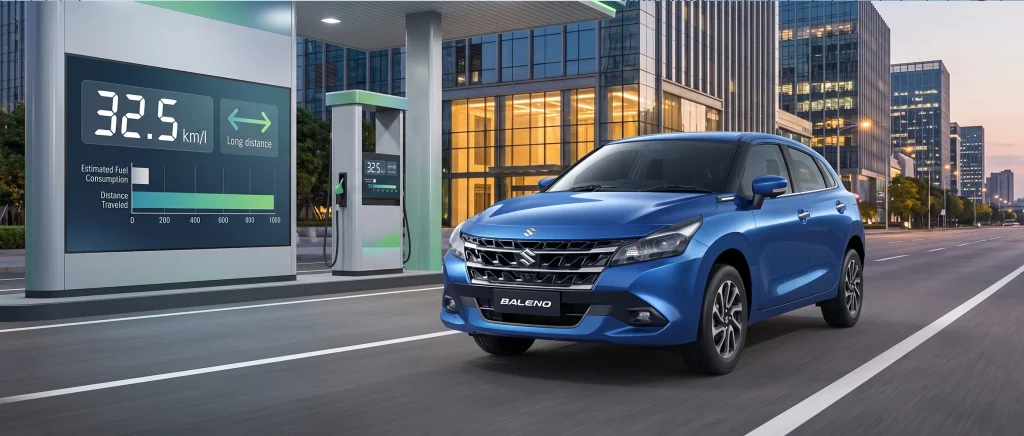
This is probably the number most buyers care about the most, right after price. The good news is that despite the car gaining a bit of weight from the extra safety and feature additions, the efficiency figures have actually improved. Here’s the full new Baleno 2026 mileage picture as certified by ARAI:
- Petrol Manual: 23.80 km/l
- Petrol AMT: 24.77 km/l
- CNG: 33.61 km/kg
That’s a genuine improvement over the outgoing model, despite the facelift being reported as up to 30kg heavier than before. In simple terms, the smaller three-cylinder engine is doing more with less, a trend we’ve already seen play out in the Swift.
Is There a Baleno Facelift Hybrid?
There’s been a fair bit of online chatter, and even a few misleading headlines suggesting a Baleno facelift hybrid variant might be part of this update. Based on what Maruti has officially confirmed and what verified auto publications have reported, that’s not accurate. The 2026 Baleno facelift comes only with petrol and CNG powertrains; there is no strong-hybrid or mild-hybrid version on offer at launch.
If you specifically want hybrid technology from Maruti’s own line-up in this price bracket, that currently sits with other models in the company’s portfolio, not the Baleno. Should Maruti introduce a hybrid Baleno down the line, it would likely arrive as a separate, later announcement rather than part of this facelift cycle. So don’t hold off your purchase decision expecting one to show up soon.
Variant Walkthrough: Sigma to Alpha (O)
Choosing from five trims may seem daunting, but we have created a list that explains the purpose of each trim.
- Sigma (Base): Gets LED tail lamps, keyless entry, power windows, a multi-information display, and the full basic safety kit: six airbags, ABS with EBD, ESP, hill hold control, and rear parking sensors. Petrol MT only.
- Delta: The volume seller for most families. Adds CNG availability and the AMT option, making it the most flexible trim for buyers who haven’t decided between fuel types yet.
- Zeta: Widely considered the sweet spot. It’s the only trim offering all four powertrain combinations, including the new CNG-AMT setup, plus a stronger feature list.
- Alpha and Alpha (O): The range-toppers that come exclusively with the petrol engines offer Level 2 ADAS, ventilated front seats, and the most comprehensive feature set, letting the Baleno compete with more expensive cars through technology.
Safety and Tech: The Non-Powertrain Highlights Worth Knowing
Powertrain aside, this update leans heavily into safety. Arguably more than any previous Baleno refresh.
- Level 2 ADAS with adaptive cruise control, lane-keep assist, and automatic emergency braking, a segment first
- Six airbags as standard across the range
- Electronic Stability Program, Hill Hold Control, and TPMS
- Ventilated front seats on higher trims
- A reworked front fascia with a bigger chrome grille and updated headlamps
None of this changes which engine goes where, but it does explain why Maruti is calling this “more than a routine cosmetic update,” even though the exterior changes themselves are fairly restrained.
How It Stacks Up Against Rivals?
The Baleno now competes against the Hyundai i20, Tata Altroz, and its own mechanical twin, the Toyota Glanza. The Altroz still holds a five-star safety rating and offers a diesel option the Baleno has never had. The i20 counters with a sunroof and stronger cabin quality. But the Baleno’s counterpunch is genuinely strong this time. The widest powertrain spread in its class, plus that unique CNG-AMT combination neither rival currently matches.
Should You Book the Sigma or Wait for Full Pricing?
If driver-assistance features and CNG-automatic convenience matter to you, this update makes a strong case for the Sigma, regardless of variant. But since Maruti hasn’t released the complete variant-wise price list yet, booking the Sigma without first comparing Delta or Zeta pricing could mean missing a better-equipped option for a small price difference. Our honest suggestion: wait a few more days for full pricing before signing anything, unless the introductory Sigma price alone is exactly what you were hoping for.
Final Thoughts
2026 Baleno Facelift is not a brand-new car, nor does Maruti want anyone to think it is. But Maruti does offer a thoroughly reworked engine, an industry-first CNG-automatic version, best-in-class safety features, and improved efficiency. In a body that consumers know and like. Whether this is enough for it to remain India’s bestselling premium hatch depends on Maruti’s pricing tactics on the Delta and Zeta versions after Diwali.
FAQ
1. What is the starting price of the 2026 Maruti Baleno facelift?
A. The Baleno facelift starts at Rs 6.10 lakh, ex-showroom, for the base Sigma petrol-manual variant. This is an introductory festive price and may change once the offer period ends.
2. Does the new Baleno come with a hybrid engine option?
A. No. Despite online speculation about a Baleno facelift hybrid variant, Maruti has launched only petrol and CNG powertrains with this update. No hybrid version is available at launch.
3. What mileage does the 2026 Baleno offer?
A. ARAI-certified figures are 23.80 km/l for the petrol manual, 24.77 km/l for the petrol AMT, and 33.61 km/kg for the CNG variant.
4. Can I get an automatic gearbox with the CNG version?
A. Yes, and it’s a first for Maruti Suzuki. The Baleno now offers a factory-fitted CNG kit paired with an AMT gearbox on select variants like the Zeta.
5. Which variant offers the most powertrain choices?
A. The Zeta trim is currently the only one offering all four combinations: petrol MT, petrol AMT, CNG MT, and CNG AMT, making it the most flexible pick in the line-up.